

From Ground Up To Finish Line, Staffing Strategy For Mixed Use Developments
NewsDecember 12, 2025
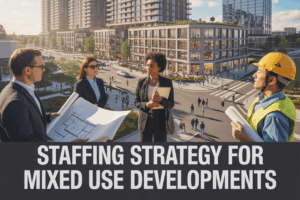
Mixed-use developments bring together retail, residential, office, and hospitality spaces under one roof—creating unique challenges for property managers and developers who need the right people to make it all work seamlessly.
This guide is for property managers, real estate developers, and facility operators who are building or managing mixed-use properties and need a clear roadmap for assembling teams that can handle everything from tenant relations to complex maintenance operations.
We’ll walk you through building a solid staffing framework during the planning stages that sets you up for success before construction even begins. You’ll also learn how to recruit and train multi-disciplinary teams that can juggle the different demands of commercial and residential tenants. Finally, we’ll show you practical ways to allocate staff efficiently across different property segments while keeping costs under control and service quality high.
Getting your mixed-use development staffing strategy right from day one means smoother operations, happier tenants, and better returns on your investment.
Understanding the Unique Staffing Challenges of Mixed Use Developments
Balancing Diverse Skill Requirements Across Multiple Property Types
Mixed-use development staffing demands an intricate understanding of how different property types operate within a single complex. Your team needs to excel in residential property management while simultaneously handling the fast-paced demands of retail environments and the professional requirements of commercial office spaces. Each property type brings its own set of technical skills, customer service standards, and operational procedures.
Residential components require staff who understand tenant relations, lease administration, and after-hours emergency protocols. Commercial spaces need professionals versed in business-to-business relationships, advanced building systems, and corporate facility standards. Retail areas demand team members who can handle high foot traffic, security concerns, and merchant relations. The challenge lies in finding individuals who can adapt across these diverse environments or building teams with complementary expertise that work seamlessly together.
Cross-training is essential for the success of mixed-use property management. Your maintenance team needs to understand both the delicate requirements of residential units and the complex mechanical systems typical in commercial buildings. Security personnel must navigate between protecting residential privacy and maintaining open, welcoming retail environments. Property managers need expertise in multiple lease types, from residential tenancy laws to complex commercial agreements and percentage rent calculations for retail spaces.
Coordinating Staff for Residential, Commercial, and Retail Operations
Operational coordination across different property segments creates unique workforce planning challenges that single-use developments never face. Your mixed-use project management teams must orchestrate schedules that accommodate the varying operational hours across property types. Residential areas require 24/7 availability for emergencies, commercial spaces typically operate during standard business hours, and retail components often demand extended evening and weekend coverage.
Staff scheduling becomes a complex puzzle when you’re managing overlapping operational needs. Leasing teams need different skill sets when showing apartments versus presenting commercial suites to potential business tenants. Your maintenance crews must prioritize urgent residential issues while ensuring commercial tenants maintain uninterrupted business operations. Cleaning and facility operations require different standards and timing across property segments.
Communication systems must bridge the gap between different operational cultures. Residential staff focus on creating community and personal relationships with tenants, while commercial teams emphasize professional service delivery and business continuity. Retail operations require quick problem resolution and customer experience optimization. Creating unified protocols that respect these different approaches while maintaining consistent service standards requires careful planning and ongoing management attention.
Managing Overlapping Service Areas and Shared Common Spaces
Shared common spaces in mixed-use facility operations present some of the most complex staffing challenges. These areas serve multiple user groups with different expectations, schedules, and needs. Your team must understand how to maintain professional standards for business visitors while creating welcoming spaces for residents and accommodating retail customer traffic patterns.
Security considerations multiply when managing overlapping service areas. Staff need training on access control systems that differentiate between residential tenants, commercial employees, retail customers, and service providers. Emergency procedures become more complex when evacuations must account for residential families, business operations, and retail crowds simultaneously. Your team needs clear protocols for handling situations that affect multiple property segments.
Maintenance and operations in shared spaces require specialized real estate staffing solutions. Common area cleaning must occur without disrupting business operations or disturbing residential areas. Landscaping and exterior maintenance need coordination with multiple user groups. HVAC and mechanical systems often serve a wide range of property types, requiring staff who understand the distinct comfort requirements and usage patterns of residential, commercial, and retail spaces.
The key to success lies in developing staff who understand the interconnected nature of mixed-use developments while maintaining expertise in their specific areas of responsibility.
Building Your Core Staffing Framework During Pre-Development Planning
Conducting Comprehensive Workforce Analysis Before Breaking Ground
Before any construction begins, competent developers dive deep into understanding the exact workforce their mixed-use development will need. This workforce analysis goes beyond simple headcounts – it’s about mapping out every role, responsibility, and skill set required across residential, commercial, retail, and office spaces.
Start by breaking down each property segment and identifying the specific operational needs. Retail spaces might need customer service specialists who understand foot traffic patterns, while office areas require facility coordinators familiar with corporate tenant expectations. Residential components demand leasing agents who can handle everything from luxury amenities to maintenance requests. The key is recognizing that mixed-use property management requires staff who can wear multiple hats while maintaining expertise in their primary areas.
Consider seasonal fluctuations and peak operational periods. A mixed-use development with retail components will have different staffing needs during the holiday season, while office spaces might require additional support during major tenant move-ins. Your workforce analysis should account for these variables and plan for flexible staffing solutions that can adapt to changing demands throughout the year.
Creating Scalable Job Descriptions for Multi-Functional Roles
Traditional job descriptions won’t cut it in mixed-use developments. You need roles that can evolve as the property grows and its tenant mix changes. When crafting these descriptions, focus on core competencies rather than rigid task lists. A property coordinator might start by managing retail tenant relations but could expand to handle office space coordination as the development matures.
Build job descriptions that emphasize adaptability and cross-functional skills. For example, a maintenance technician should be comfortable working with both residential HVAC systems and commercial equipment. Security personnel need to understand the different protocols for retail theft prevention, office building access control, and residential privacy requirements.
Include clear progression paths within each role. A leasing associate might start with residential units but could advance to handle commercial leasing as they gain experience. This approach helps with retention and ensures you’re developing talent internally rather than constantly recruiting from outside.
Establishing Clear Reporting Structures Across Different Property Segments
Mixed-use developments can quickly become organizational nightmares without clear reporting structures. The challenge is creating a hierarchy that respects the unique needs of each property segment while maintaining overall cohesion.
Consider implementing a matrix reporting structure where staff report to both a segment-specific supervisor and a property-wide manager. This dual reporting system ensures that residential staff understand residential-specific protocols while staying aligned with overall property objectives. A retail coordinator might report to both a retail operations manager and the general property manager, creating accountability across different operational areas.
Communication channels between segments are crucial. Regular cross-segment meetings help staff understand how their work impacts other areas of the development. When the retail team is aware of upcoming residential events, they can prepare for increased foot traffic. When office building staff understand retail promotion schedules, they can coordinate deliveries and access accordingly.
Developing Cross-Training Programs for Maximum Staff Flexibility
Cross-training isn’t just lovely to have in mixed-use developments – it’s essential for operational success. Your staffing strategy and real estate development approach should include comprehensive programs that prepare employees to handle multiple property segments effectively.
Start with foundational training that covers all property segments. Every staff member should understand basic operations across residential, commercial, and retail areas. This knowledge helps them direct tenants and visitors appropriately and step in during coverage gaps.
Develop specialized cross-training tracks based on operational overlap. Maintenance staff should be trained in both residential and commercial systems. Customer service representatives need skills for handling both retail customers and office building visitors. Security personnel must understand protocols for all property segments.
Create incentive structures that reward participation in cross-training. Staff who complete additional certifications could receive salary bumps or priority consideration for promotions. This approach builds a more versatile workforce while showing employees that their professional development matters to the organization.
Regular rotation programs help staff gain hands-on experience in different segments. A leasing agent might spend a month with the retail team to understand how foot traffic affects residential areas. This exposure creates more well-rounded employees who can adapt quickly to changing operational needs.
Strategic Recruitment and Hiring for Multi-Disciplinary Teams
Identifying Candidates with Versatile Property Management Experience
Finding the right talent for mixed-use development staffing requires looking beyond traditional single-sector experience. The ideal candidates possess a unique blend of skills spanning residential, commercial, and retail property management. These professionals understand how to navigate the complex operational demands that arise when multiple property types coexist within one development.
Start by targeting candidates who have worked in environments with diverse tenant needs. Former managers from shopping centers with residential components, hotel properties with retail spaces, or large commercial complexes with mixed tenancies often bring valuable cross-sector insights. Their experience managing different lease structures, understanding varied building codes, and coordinating with multiple stakeholder groups makes them particularly valuable for mixed-use property management.
Look for professionals who demonstrate adaptability and problem-solving skills across different property segments. A candidate who has successfully managed both office buildings and apartment complexes will understand the nuances of commercial lease negotiations while also being familiar with residential tenant relations. This versatility becomes crucial when dealing with the unique challenges that emerge in mixed-use developments, where residential noise complaints might affect retail operations, or where commercial loading schedules need to coordinate with residential parking needs.
Leveraging Industry Networks to Source Specialized Talent
Building a robust network within the real estate industry is essential for successful multi-disciplinary team recruitment. Professional associations like the International Council of Shopping Centers (ICSC), National Association of Residential Property Managers (NARPM), and Building Owners and Managers Association (BOMA) serve as valuable talent pools where you can connect with experienced property management professionals.
Industry conferences and networking events offer opportunities to meet candidates who may not be actively job-seeking but could be interested in the unique challenges of mixed-use projects. These professionals often bring a wealth of experience and established relationships that can benefit your entire operation.
Consider partnering with specialized recruitment firms that focus on real estate staffing solutions. These firms understand the nuanced requirements of mixed-use facility operations and can help identify candidates who possess the specific skill sets your development requires. They often maintain databases of pre-screened professionals with experience in commercial residential staffing scenarios.
Don’t overlook internal referral programs. Your existing team members likely have industry connections and can recommend qualified candidates who understand the complexities of property development workforce planning. Incentivize these referrals to encourage active participation in your talent acquisition efforts.
Implementing Competency-Based Interview Processes
Traditional interviewing approaches often fall short when evaluating candidates for mixed-use property management roles. Competency-based interviews allow you to assess how candidates have handled specific situations that mirror the challenges they’ll face in your development.
Design scenarios that test their ability to manage conflicting priorities between different property segments. Ask candidates to describe how they would handle a situation in which retail tenants need extended delivery hours that conflict with residential quiet-time policies. Their responses will reveal their problem-solving approach and ability to find creative solutions that satisfy multiple stakeholders.
Evaluate their communication skills across different audiences. Mixed-use developments require staff who can effectively communicate with residential tenants, commercial lessees, retail customers, and various service providers. Role-playing exercises can help you assess whether candidates can adapt their communication style appropriately for each audience.
Include technical assessments that cover knowledge areas spanning multiple property types. Test their understanding of different lease structures, maintenance requirements, and regulatory compliance issues that apply to various segments within your development. This approach ensures candidates possess the comprehensive knowledge base necessary for effective mixed-use project management teams.
Consider panel interviews that include representatives from different operational areas within your organization. This approach allows you to evaluate how candidates interact with various team members and whether they can build rapport with team members from other functional areas. The diversity of perspectives in the interview process also helps ensure you’re selecting candidates who can work effectively within your existing team structure.
Implementing Effective Training Programs for Complex Operations
Creating Comprehensive Onboarding for Mixed Use Environments
Staff joining mixed-use development teams need specialized preparation that addresses the unique complexities of managing multiple property types under one roof. Traditional onboarding programs won’t cut it when your team needs to understand everything from retail lease management to residential tenant relations and office space coordination.
Start by developing property-specific modules that cover each segment of your mixed-use facility operations. Your retail-focused staff should master POS systems, inventory management, and protocols for peak shopping periods. At the same time, residential team members need deep knowledge of tenant screening, maintenance request systems, and lease enforcement procedures. Office management personnel require expertise in corporate client relations, facility booking systems, and professional service coordination.
Cross-training becomes essential in mixed-use property management scenarios. Every team member should understand basic operations across all property segments, even if they specialize in one area. This creates flexibility during peak periods, staff shortages, or emergencies. A residential leasing agent who understands retail operations can assist during busy shopping seasons, while office management staff can support residential move-in processes when needed.
Technology training is crucial in mixed-use environments. Staff must navigate multiple management systems, from residential property management software to retail POS integration and office space booking platforms. Create hands-on training sessions that simulate real-world scenarios across different property segments.
Establishing Ongoing Professional Development Pathways
Career growth in mixed-use development staffing requires structured pathways that acknowledge the multifaceted nature of these properties. Traditional real estate career tracks often focus on single property types, leaving mixed-use professionals without clear advancement opportunities.
Design dual-track development programs that allow specialization while maintaining cross-functional knowledge. Property management professionals can advance from residential management into retail operations, developing valuable hybrid skill sets that command higher compensation and greater responsibility.
Partner with industry associations and educational institutions to provide certifications relevant to mixed-use facility operations. Encourage team members to pursue credentials in property management, retail operations, hospitality management, and commercial real estate. Many staff members thrive when given opportunities to expand their expertise across multiple disciplines.
Mentorship programs work exceptionally well in mixed-use environments. Pair experienced multi-disciplinary team members with newer staff to share knowledge about managing complex property relationships. Senior retail managers can mentor office operations staff, while residential experts guide commercial team members through tenant relations challenges.
Regular skills assessments help identify development opportunities and career interests. Some staff members discover unexpected talents when exposed to different property segments, leading to lateral moves that benefit both individual growth and operational efficiency.
Building Emergency Response Protocols Across All Property Types
Emergency preparedness in mixed-use developments requires coordinated protocols that address the unique risks and challenges of combining residential, commercial, and retail spaces. Different property types face distinct emergency scenarios, from medical emergencies in residential areas to security threats in retail spaces and workplace incidents in office environments.
Develop integrated emergency response teams that include representatives from each property segment. Your residential manager needs direct communication channels with retail security personnel during after-hours incidents. Office building supervisors must coordinate with residential staff during building-wide emergencies that affect multiple property types.
Communication systems become critical during emergencies spanning multiple property segments. Install unified alert systems that can broadcast targeted messages to specific areas while maintaining overall coordination. Residents need different information from retail customers during the same emergency event.
Regular emergency drills should simulate cross-property scenarios. Practice evacuations that move people from residential units through retail areas to designated safety zones. Test communication protocols between different management teams to identify gaps before real emergencies occur.
Train staff to recognize how emergencies in one property segment can impact others. A fire in the retail section affects residential elevator access, while a residential water main break might impact office operations. This interconnected thinking helps staff respond more effectively to complex emergencies.
Developing Customer Service Standards for Diverse Tenant Populations
Mixed-use property management demands flexible customer service approaches that recognize the different expectations and needs of residential tenants, retail customers, and office clients. Each population brings distinct service requirements that must be addressed while maintaining consistent quality standards.
Residential tenants expect personalized attention, prompt maintenance responses, and respect for their home environment. They need staff who understand privacy concerns, family dynamics, and the emotional investment people have in their living spaces. Response times for residential issues often carry higher emotional stakes than those for commercial matters.
Retail customers require fast, efficient service that doesn’t interrupt their shopping experience. They expect knowledgeable staff who can provide immediate assistance with directions, store information, and problem resolution. Retail service standards focus on convenience, accessibility, and seamless experiences.
Office tenants demand professional interactions that support their business operations. They need reliable facility management, efficient problem resolution, and minimal disruption to their work environment. Corporate clients often have specific service level agreements that require precise execution and documentation.
Create service protocols that allow staff to adjust their approach to customer types while maintaining consistent core values. Train team members to recognize cues indicating whether they’re serving a resident with a home issue, a shopper needing quick assistance, or a business professional requiring corporate-level service.
Implement feedback systems tailored to each tenant population. Residential surveys focus on comfort and community satisfaction; retail feedback emphasizes convenience and the shopping experience; and office evaluations concentrate on business support and facility reliability. This multi-faceted approach provides comprehensive insights into service quality across all property segments.
Optimizing Staff Allocation and Scheduling Across Property Segments
Designing Flexible Staffing Models for Peak and Off-Peak Periods
Managing staffing for mixed-use development requires a deep understanding of how different property segments operate throughout the day, week, and season. Retail spaces buzz with activity during shopping hours and weekends, while office areas see their peak during standard business hours. Residential components maintain steady demand around the clock, with spikes during evening and weekend periods.
Innovative staffing strategy, real estate development teams create core staffing schedules that cover essential functions 24/7, then build flexible layers on top. This might mean having security and maintenance staff as your constant foundation, with additional cleaning crews, customer service representatives, and specialized technicians scheduled during peak periods.
Cross-training becomes your secret weapon here. When your retail customer service representative can also handle basic residential inquiries, or when your office building maintenance tech understands the residential systems, you create staffing flexibility that adapts to real-time needs. This mixed-use property management approach reduces overtime costs while maintaining service quality.
Consider implementing shift-sharing arrangements that allow staff to work across different property segments within the same development. A front desk person might handle office building reception during weekday business hours, then transition to residential duties in the evening. This maximizes staff utilization while providing employees with varied, engaging work experiences.
Creating Efficient Communication Systems Between Different Teams
Breaking down silos between residential, commercial, and retail teams starts with establishing clear communication protocols that everyone understands and follows. Mixed-use facility operations demand real-time information sharing because issues in one segment often impact others.
Create centralized communication hubs using digital platforms that enable instant messaging between teams, shared calendars for maintenance schedules, and transparent issue-tracking systems. When the retail team is aware of a planned utility shutdown, they can proactively communicate with tenants. When residential staff report a parking issue, commercial teams can adjust accordingly.
Regular cross-departmental meetings keep everyone aligned on priorities and upcoming events. Weekly all-hands meetings, monthly deep-dive sessions, and quarterly strategic planning sessions ensure that multi-disciplinary team recruitment efforts translate into actual collaborative working relationships.
Establish clear escalation procedures so team members know exactly when and how to involve other departments. A simple decision tree helps staff determine whether a noise complaint from a residential tenant requires involving the commercial team, security, or both.
Implementing Technology Solutions for Streamlined Operations
Modern property management hiring decisions should prioritize candidates who are comfortable with integrated technology platforms that manage multiple property types from one dashboard. These systems consolidate work orders, tenant communications, financial reporting, and staff scheduling across all segments.
Mobile apps enable your staff to update maintenance requests, communicate with tenants, and access building information from anywhere in the development. When a maintenance worker completes a task in the office building, they can immediately check for pending residential issues without returning to a central office.
Automated scheduling software considers the unique demands of each property segment while optimizing overall staff allocation. These systems factor in seasonal patterns, special events, tenant move-ins, and maintenance schedules to suggest optimal staffing levels.
Data analytics tools help track performance metrics across all segments, identifying patterns that inform better workforce planning for property development. You might discover that retail foot traffic correlates with increased residential package deliveries, allowing you to adjust staffing accordingly. Or find that HVAC issues in that office building spike during specific weather patterns, enabling proactive maintenance scheduling.
Integrated security systems provide centralized monitoring while allowing segment-specific access controls. Your commercial residential staffing team can respond to incidents quickly while maintaining appropriate privacy and security boundaries between different property types.
Measuring Success and Continuous Improvement of Your Staffing Strategy
Establishing Key Performance Indicators for Mixed Use Properties
Success in mixed-use development staffing requires clear metrics that reflect the unique complexity of these properties. Start by tracking occupancy rates across different segments – residential, commercial, and retail spaces each have distinct patterns that impact staffing needs. Monitor tenant satisfaction scores separately for each property type, as retail tenants’ expectations differ significantly from those of office or residential tenants.
Staff productivity metrics should include response times for maintenance requests, lease processing speed, and problem resolution rates across all property segments. Track your mixed-use development staffing costs as a percentage of gross revenue, comparing this against industry benchmarks while accounting for the premium associated with managing diverse property types.
Revenue per employee offers valuable insight into operational efficiency, but it is calculated separately for each property segment to identify which areas drive the highest returns. Monitor staff retention rates closely, as high turnover in mixed-use property management can disrupt the seamless experience tenants expect across different spaces.
Conducting Regular Staff Performance Reviews and Feedback Sessions
Monthly one-on-one sessions are more effective than traditional annual reviews for mixed-use properties, given the dynamic nature of these environments. Structure these conversations around specific property segments your team members manage, discussing challenges unique to coordinating between residential, commercial, and retail operations.
Create feedback loops that capture tenant input across all property types. A maintenance technician might excel at residential repairs but struggle with the requirements of commercial equipment. Regular performance discussions help identify these gaps before they impact tenant satisfaction.
Peer feedback sessions between departments prove invaluable in mixed-use facility operations. Your leasing team’s insights about prospective tenants can help maintenance staff prepare for different property uses, while security personnel often spot operational inefficiencies that other departments miss.
Document performance trends over time rather than focusing on single incidents. A property manager might show declining performance during peak retail seasons, signaling the need for additional support or training during high-traffic periods.
Adapting Staffing Levels Based on Property Performance Data
Property performance data reveals patterns that should drive your staffing decisions. Retail spaces typically require increased security and maintenance during evening hours and weekends, while office spaces need heavy cleaning and maintenance support after business hours during weekdays.
Seasonal fluctuations affect different property segments at other times. Retail spaces see increased activity during holiday seasons, residential areas experience higher turnover during summer months, and office spaces often have reduced activity during vacation periods. Your mixed-use property management staffing should flex accordingly.
Use occupancy data to predict staffing needs three to six months ahead. A new major commercial tenant moving in requires additional leasing support, enhanced security, and potentially modified maintenance schedules. Similarly, high residential vacancy rates might signal the need to shift resources toward marketing and showing apartments.
Monitor utility usage patterns, maintenance request volumes, and common-area traffic to identify when additional staff support is needed. A surge in commercial tenant complaints about building temperature might indicate your facilities team needs reinforcement rather than replacement.
Planning for Long-Term Growth and Expansion Opportunities
Build your team with expansion in mind from day one. Cross-train key personnel in multiple property types so they can adapt as your portfolio grows. A maintenance supervisor experienced in both residential and commercial operations becomes invaluable when managing larger mixed-use developments.
Develop relationships with specialized real estate staffing solutions providers who understand the unique requirements of mixed-use properties. Having trusted partners in place speeds up scaling when opportunities arise.
Create career advancement paths that leverage the diverse experience mixed-use developments provide. A leasing agent who masters both residential and commercial leasing becomes a valuable asset for future properties, while maintenance staff gain broader skills working across property types.
Document your successful staffing strategies and operational procedures as you refine them. This knowledge base becomes the foundation for training teams at new properties and maintaining consistency across your growing portfolio. Consider which roles can be centralized across multiple properties and which require on-site presence to maintain service quality standards.
Mixed-use developments present a complex web of staffing needs that require careful planning and strategic thinking from day one. Getting your team structure right during pre-development sets the foundation for smooth operations across retail, residential, and commercial spaces. The key is building multi-disciplinary teams that can adapt to different property segments while maintaining consistent service standards throughout your development.
Success comes down to bright recruitment, comprehensive training, and flexible scheduling that matches your diverse tenant and resident needs. Regular performance reviews and feedback loops help you fine-tune your approach as your development grows and evolves. Start planning your staffing strategy early, invest in cross-training your team members, and stay flexible as you learn what works best for your unique property mix. Your residents and tenants will notice the difference when you have the right people in the right places at the correct times.
K2 Staffing delivers specialized recruiting solutions that help companies build strong, reliable teams across engineering and construction. From mechanical engineering recruiters in Los Angeles and civil engineering recruiters in Long Beach to expert leadership through construction superintendent recruiters in Irvine, we connect you with professionals who make a lasting impact. Rely on our Construction Staffing and Engineering Recruitment services to drive project success and long-term growth.