

Why Multimillion Dollar Construction Projects Are Driving A Superintendent Shortage
NewsDecember 3, 2025
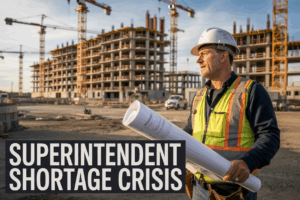
The construction industry faces a critical talent crisis as multimillion-dollar construction projects surge nationwide while qualified superintendents become increasingly scarce. This construction superintendent shortage affects general contractors, construction companies, and project developers who rely on skilled leadership to deliver complex builds on time and budget.
Large-scale construction projects demand superintendents with specialized expertise in coordinating large teams, managing complex timelines, and navigating complex building systems. Yet the construction workforce crisis has created a perfect storm in which project complexity grows faster than the talent pool can keep pace.
This skilled construction worker shortage at the superintendent level creates ripple effects across entire projects. We’ll explore how the rising complexity of modern construction drives superintendent demand beyond available supply, examine the widening skills gap between what projects need and what workers offer, and analyze how this construction talent shortage impacts project budgets and timelines across the industry.
The Growing Scale and Complexity of Modern Construction Projects
Record-Breaking Project Values Exceeding Billions
Construction projects today dwarf their predecessors in both scale and financial investment. The industry now regularly sees multimillion-dollar construction projects that would have been unimaginable decades ago. Significant infrastructure developments, such as airport expansions, metropolitan transit systems, and mixed-use commercial complexes, routinely cross the billion-dollar threshold. These massive undertakings require construction project management expertise that goes far beyond traditional building knowledge.
The sheer financial magnitude creates unprecedented pressure on project leadership. A superintendent overseeing a $2 billion data center construction faces vastly different challenges than one managing a $50 million office building. Every decision carries exponentially higher stakes, with even minor delays or errors potentially costing millions. This financial pressure intensifies the construction superintendent shortage as fewer professionals possess the experience and confidence to handle such massive responsibilities.
Advanced Technology Integration Requirements
Today’s large-scale construction projects demand superintendents who can navigate complex technological ecosystems. Building Information Modeling (BIM) systems, drone surveillance, IoT sensors, and automated equipment monitoring have become standard project components. Superintendents must coordinate between traditional construction crews and technology specialists, often managing systems they didn’t grow up with in the field.
Innovative building technologies, prefabricated component tracking, and real-time data analytics require continuous learning and adaptation. The construction workforce crisis deepens when experienced superintendents struggle to keep pace with rapidly evolving digital tools, while younger tech-savvy workers lack the necessary field experience.
Multi-Phase Development Timelines
Modern projects often span multiple years and require intricate phasing. Master-planned communities, urban redevelopment districts, and corporate campuses unfold across extended timelines with overlapping construction phases. Superintendents must maintain project continuity while managing evolving team compositions, changing regulations, and shifting market conditions.
These extended timelines strain the available pool of skilled construction workers as superintendents become locked into long-term commitments, reducing their availability for other projects and limiting the industry’s capacity to handle multiple concurrent developments.
Increased Regulatory Compliance Demands
Environmental regulations, safety protocols, and local compliance requirements have multiplied dramatically. Superintendents now navigate complex webs of federal, state, and municipal rules while maintaining tight construction schedules. LEED certification, environmental impact assessments, and strict safety documentation requirements demand specialized knowledge that many experienced superintendents must acquire mid-career.
This regulatory complexity contributes significantly to the demand for construction superintendents exceeding supply, as projects require leaders who can balance compliance expertise with traditional construction management skills.
Rising Demand for Experienced Construction Superintendents
Critical Role in Project Success and Safety
Construction superintendents serve as the operational backbone of multimillion-dollar construction projects, making their shortage particularly devastating for large-scale developments. These professionals coordinate every aspect of daily operations, from managing subcontractor schedules to ensuring safety compliance across massive job sites. On projects worth hundreds of millions, a single superintendent might oversee teams of 300+ workers across multiple construction phases simultaneously.
Their expertise becomes even more critical when dealing with complex infrastructure projects like high-rise buildings, hospitals, or manufacturing facilities. A seasoned superintendent can prevent costly delays by anticipating potential conflicts between trades, identifying supply chain issues before they affect timelines, and maintaining quality standards to avoid expensive rework. The financial stakes make their role indispensable – one poorly managed week on a large construction project can cost developers millions in delays, safety violations, or quality failures.
Safety management represents another crucial aspect where experienced superintendents prove invaluable. They understand how to implement comprehensive safety protocols across diverse work environments, coordinate emergency response procedures, and maintain regulatory compliance. The construction superintendent shortage has left many projects vulnerable to safety incidents that could have been prevented with proper oversight.
Limited Pool of Qualified Candidates
The construction industry faces a severe bottleneck in qualified superintendent candidates, particularly for multimillion-dollar projects that require specialized expertise. Most superintendents advance through decades of hands-on experience, starting as laborers or skilled tradespeople before gradually taking on supervisory roles. This lengthy development path means there’s no quick fix to expand the available talent pool.
Recent industry data shows that over 40% of construction superintendents are approaching retirement age, creating an impending talent cliff that threatens project delivery capabilities. The situation becomes more challenging when considering that multimillion-dollar projects often require superintendents with specific experience in complex construction types – healthcare facilities, data centers, or high-rise construction each demand unique skill sets that take years to develop.
Educational pathways haven’t kept pace with industry needs either. While construction management programs exist, they rarely provide the deep operational knowledge and crisis management skills that experienced superintendents possess. Many contractors report that even well-educated candidates require 5-10 years of additional training before they can handle the responsibilities of large-scale construction project management independently.
The geographic distribution of qualified candidates creates additional complications. Experienced superintendents often prefer to stay in familiar markets, making it difficult for contractors to staff projects in emerging markets or regions experiencing sudden growth spurts.
Competition Among Major Contractors
Major construction firms now engage in intense bidding wars for experienced superintendents, driving compensation packages to unprecedented levels. Companies routinely offer signing bonuses, luxury vehicle allowances, and profit-sharing arrangements to attract talent away from competitors. Some contractors have started creating “superintendent pipelines” by partnering with smaller firms to identify and recruit promising candidates before they become widely known in the market.
The construction workforce crisis has transformed superintendent recruitment into a strategic business function. Large contractors maintain dedicated talent acquisition teams focused solely on construction project management positions, using headhunters, industry networking events, and even social media campaigns to identify potential candidates. These efforts often target superintendents who aren’t actively job hunting, requiring creative approaches and substantial financial incentives.
Regional contractors are particularly vulnerable to larger competitors who can offer more attractive packages and a broader project portfolio. When a principal national contractor enters a local market for a large-scale construction project, they often poach the best local talent, creating ripple effects that impact smaller projects throughout the region.
The competition has also led to innovative retention strategies. Companies now offer accelerated career advancement paths, specialized training programs, and equity participation to keep their best superintendents from jumping ship. Some firms have begun offering “project ownership” structures in which experienced superintendents receive performance-based bonuses tied directly to project success metrics, creating financial incentives that rival entrepreneurial opportunities.
Skills Gap Between Available Workers and Project Requirements
Advanced Project Management Expertise Needed
The construction superintendent shortage stems mainly from the gap between what projects demand and what available workers bring to the table. Modern multimillion-dollar construction projects require superintendents who can juggle complex scheduling systems, coordinate with multiple subcontractors simultaneously, and adapt to constantly changing project specifications. Many candidates have solid field experience but lack the sophisticated project management skills needed for large-scale construction projects.
Today’s superintendents must understand critical path method scheduling, resource allocation optimization, and risk assessment protocols that weren’t standard requirements even a decade ago. They need to interpret detailed Gantt charts, manage procurement timelines, and coordinate deliveries worth millions of dollars. The complexity of construction project management has evolved far beyond basic supervision, creating a significant barrier for many otherwise qualified construction workers.
Technology Proficiency Expectations
Digital transformation has revolutionized construction sites, but many experienced superintendents struggle with the technology learning curve. Building Information Modeling (BIM), drone surveying, real-time project-tracking software, and mobile reporting applications are now standard tools on significant projects. Superintendents must navigate tablets and smartphones as confidently as they read blueprints.
Project management platforms like Procore, PlanGrid, and Autodesk Construction Cloud require daily interaction and data input. GPS-enabled equipment tracking, digital quality control checklists, and cloud-based document management systems demand tech-savvy professionals. The construction industry labor shortage intensifies when qualified superintendents can’t adapt to these digital requirements, leaving projects understaffed despite having experienced candidates available.
Leadership Capabilities for Large Teams
Managing crews of 200-500 workers across multiple trades requires exceptional leadership skills that many superintendents haven’t developed. These massive teams include subcontractors, union representatives, specialty trades, and support staff, all of whom need clear direction and coordination. The skilled construction workers shortage means superintendents often work with less experienced crews, requiring stronger mentoring and training abilities.
Conflict resolution becomes critical when managing diverse teams with competing priorities and tight deadlines. Superintendents must communicate effectively across language barriers, mediate disputes between trades, and maintain morale during stressful project phases. Many candidates excel at technical aspects but struggle with the people management demands of multimillion-dollar construction projects.
Safety Management Certifications
Safety requirements on large projects have become increasingly complex, demanding specialized certifications that many superintendents lack. OSHA 30-hour training is just the starting point – projects now require certifications in confined space safety, crane operations oversight, hazardous materials handling, and emergency response coordination.
Superintendents must understand fall protection systems, implement safety protocols for high-risk activities, and maintain detailed incident reporting. Insurance companies and project owners demand documented safety training, creating additional barriers for otherwise qualified candidates. The construction talent shortage deepens when experienced superintendents can’t meet these evolving certification requirements.
Multi-Trade Coordination Experience
The complexity of modern construction requires superintendents who understand how different trades interact and affect each other’s work. Electrical, plumbing, HVAC, structural steel, and specialty systems must be coordinated with precision timing. Many superintendents have deep expertise in one trade but lack the broad knowledge needed for complex coordination.
Understanding how mechanical systems interface with structural elements, how electrical rough-in affects drywall installation, and how specialty trades impact the critical path requires years of diverse experience. The construction workforce crisis intensifies when projects can’t find superintendents with sufficient multi-trade backgrounds to manage these intricate relationships effectively.
Financial Impact of Superintendent Shortages on Projects
Project Delays and Cost Overruns
The construction superintendent shortage hits project budgets hard, with delays becoming the most visible symptom. When experienced superintendents aren’t available, project timelines stretch far beyond original estimates. Multimillion-dollar construction projects suffer the most, as inexperienced leadership struggles to coordinate complex workflows involving hundreds of workers across multiple trades.
These delays trigger a domino effect of financial consequences. Extended project timelines mean paying for equipment rentals longer, keeping temporary facilities operational beyond planned dates, and covering additional labor costs. Weather protection, site security, and insurance expenses pile up month after month. What started as a $50 million project can easily balloon to $65 million or more when superintendent shortages push timelines out.
The ripple effects reach every corner of the project. Subcontractors face scheduling conflicts as they wait for delayed phases to begin, often charging premium rates for rushed work later. Material costs fluctuate during extended project periods, sometimes requiring expensive change orders when original pricing expires. Client financing costs increase substantially when projects drag on for months beyond completion dates.
Quality Control Issues
Without experienced superintendents overseeing work quality, construction projects face severe defects that prove expensive to correct. Skilled superintendents catch problems early, but understaffed projects often miss critical issues until much later in the construction process. Rework becomes a significant budget drain, sometimes requiring demolition and reconstruction of entire building sections.
The construction superintendent shortage means less experienced personnel make crucial decisions about materials, installation methods, and quality standards. These decisions ripple throughout the entire project, creating compounded problems that weren’t apparent during the initial construction phases. What seems like a minor oversight during framing can become a significant structural issue requiring expensive remediation.
Quality problems discovered after project completion trigger warranty claims, legal disputes, and reputation damage that costs far more than the original construction. Building owners face ongoing maintenance issues, reduced property values, and potential liability concerns when quality suffers due to inadequate supervision during construction.
Safety Incident Increases
The shortage of qualified construction superintendents directly correlates with rising workplace accidents on large-scale construction projects. Experienced superintendents maintain safety protocols, identify hazards before they cause injuries, and ensure proper training compliance across all trades. When projects operate without adequate supervision, safety incidents spike dramatically.
Workplace injuries create immediate financial impacts through workers’ compensation claims, project delays while investigations occur, and potential OSHA fines. More serious accidents can shut down entire project sites for days or weeks, causing massive financial losses that dwarf the cost of hiring qualified superintendents.
Insurance premiums increase substantially for contractors with poor safety records, making future project bids less competitive. The construction workforce crisis means companies can’t afford additional reputation damage that makes recruiting even more difficult. Safety incidents create legal exposure that can bankrupt contractors when serious injuries occur on multimillion-dollar construction projects.
Client Relationship Strain
Project delays, quality issues, and safety problems inevitably damage relationships between contractors and clients. The construction industry labor shortage forces contractors to take on projects without adequate superintendent coverage, setting up conflicts from day one. Clients become frustrated when promised completion dates slip repeatedly due to management shortages.
Communication breaks down when superintendents juggle multiple projects simultaneously, unable to provide timely updates or address client concerns promptly. Trust erodes as budget overruns mount and explanations about the skilled construction workers shortage feel like excuses rather than legitimate business challenges.
Long-term business relationships suffer permanent damage when projects fail to meet expectations due to superintendent shortages. Repeat clients look elsewhere for future projects, and negative references spread throughout the industry. The construction talent shortage forces companies to choose between maintaining client relationships and taking on profitable projects they can’t adequately supervise.
Industry Response to Address the Shortage
Competitive Salary and Benefits Packages
Companies across the construction industry are dramatically increasing compensation packages to attract and retain skilled superintendents for their multimillion-dollar construction projects. The average superintendent salary has jumped 25-40% over the past five years in major metropolitan areas, with some firms offering six-figure signing bonuses for candidates with experience managing complex projects exceeding $50 million.
Beyond base salaries, forward-thinking contractors are redesigning their benefits packages to include profit-sharing arrangements, company vehicles, comprehensive health coverage, and generous retirement contributions. Several major firms have introduced retention bonuses tied to project completion milestones, recognizing that retaining experienced superintendents throughout the entire project lifecycle saves significant costs associated with turnover and knowledge transfer.
Housing allowances and relocation assistance have become standard offerings, particularly for superintendents willing to work on large-scale construction projects in remote locations or high-cost metropolitan areas. Some companies have even begun providing temporary housing or extended-stay accommodations for superintendents managing multi-year megaprojects.
Accelerated Training and Development Programs
The construction workforce crisis has pushed companies to develop intensive training programs that compress traditional learning curves. Major contractors are partnering with trade schools and universities to create fast-track superintendent certification programs that combine classroom instruction with hands-on project experience.
These accelerated programs typically span 12-18 months rather than the traditional decade-long path from field worker to superintendent. Participants work alongside experienced superintendents on active construction sites while completing coursework in project management, safety protocols, and construction technology. The programs often guarantee employment placement with participating contractors upon successful completion.
Several industry leaders have invested millions in internal training academies that simulate real construction scenarios using virtual reality and advanced modeling software. These facilities allow trainees to practice managing complex project situations without the risks and costs associated with on-site learning mistakes.
Mentorship and Succession Planning
Innovative construction companies are addressing the shortage of construction superintendents through structured mentorship programs that pair seasoned superintendents with high-potential project managers and foremen. These relationships typically span multiple projects, allowing mentees to observe decision-making processes across different construction phases and challenges.
Succession planning has moved from an afterthought to a strategic priority, with many firms identifying potential superintendent candidates years before they’re needed. Companies track promising employees through formal development programs that include rotational assignments, cross-training opportunities, and leadership development workshops.
Some contractors have created “superintendent-in-training” positions that offer premium pay for candidates committed to multi-year development tracks. These roles provide supervised responsibility on smaller projects while building the skills needed for significant construction project management roles.
Technology Tools to Support Superintendents
Construction companies are investing heavily in technology solutions that reduce the administrative burden on superintendents and enhance their project oversight capabilities. Cloud-based project management platforms now enable real-time collaboration between superintendents, subcontractors, and project stakeholders, eliminating many time-consuming communication bottlenecks.
Mobile construction apps allow superintendents to conduct inspections, update schedules, and manage change orders directly from the field using tablets and smartphones. These tools include photo documentation, automatic progress reporting, and integration with accounting systems, which streamline project administration.
Drone technology and 3D modeling software have become standard tools that help superintendents monitor progress across large construction sites more efficiently than traditional walkthrough methods. Some companies have introduced AI-powered scheduling software that automatically adjusts timelines based on weather, material deliveries, and workforce availability.
Wearable technology and IoT sensors are being deployed to enhance safety monitoring and equipment tracking, reducing the time superintendents spend on manual safety inspections and equipment management tasks. These innovations allow experienced superintendents to oversee larger teams and more complex projects than previously possible.
Long-Term Consequences for the Construction Industry
Project Feasibility Challenges
The construction superintendent shortage is reshaping how developers and contractors evaluate multimillion-dollar construction projects. What once seemed like straightforward builds now face serious questions about whether they can be completed on time and within budget. Without experienced superintendents to oversee complex operations, projects that would have been greenlit five years ago are now being postponed or cancelled entirely.
This shift affects everything from residential high-rises to commercial developments. Developers are discovering that securing financing becomes increasingly complex when they can’t guarantee qualified project leadership. Banks and investors recognize that demand for construction superintendents far exceeds supply, making these professionals a critical factor in project success. The result is a more cautious approach to project approval, with many ambitious developments sitting on the drawing board indefinitely.
Smaller contractors are particularly vulnerable, often forced to turn down lucrative opportunities simply because they lack access to qualified superintendents. This creates a concentration effect, in which only the largest firms with established talent pipelines can pursue major projects, reducing competition and potentially driving up costs across the industry.
Industry Growth Limitations
The skilled construction worker shortage at the superintendent level is creating a bottleneck that is affecting the entire industry’s growth trajectory. Construction companies find themselves trapped in a cycle in which they can’t expand their operations without more qualified superintendents, yet can’t attract these professionals without offering competitive projects and compensation packages.
This limitation is particularly pronounced in rapidly growing metropolitan areas where construction project management expertise is desperately needed. Cities experiencing population booms are seeing their infrastructure and housing development plans delayed or scaled back because the construction workforce crisis extends to leadership positions. The ripple effect touches housing affordability, commercial development, and public infrastructure projects.
Regional construction markets are becoming increasingly uneven. Areas with established construction programs and strong labor relationships maintain some advantage, while emerging markets struggle to attract the talent needed to support growth. This geographic disparity in superintendent availability is reshaping where and how construction companies choose to operate, with some firms relocating to areas with better access to qualified personnel.
Innovation and Efficiency Impacts
The shortage of experienced superintendents is actually accelerating specific technological innovations while hampering others. Companies are investing heavily in project management software, drone technology, and automated reporting systems to help less experienced supervisors manage large-scale construction projects more effectively. These tools are becoming essential rather than optional as firms try to bridge the experience gap.
However, the construction industry labor shortage at the superintendent level is slowing the adoption of more complex innovations. Advanced building techniques, sustainable construction methods, and integrated project delivery systems all require experienced oversight to implement successfully. Without sufficient qualified superintendents, many companies are reverting to traditional methods they know their available staff can handle, even if these approaches are less efficient.
The knowledge transfer problem is becoming acute. Veteran superintendents approaching retirement bring decades of experience, while younger professionals struggle to gain the hands-on experience needed to manage multimillion-dollar projects. This brain drain is affecting not just individual companies but the industry’s collective ability to innovate and improve efficiency. The construction talent shortage is causing hard-won expertise to be lost faster than it can be replaced, potentially setting back industry progress by years.
The construction industry faces a perfect storm: projects are getting bigger and more complex while experienced superintendents are becoming harder to find. These massive multimillion-dollar builds need leaders who can juggle everything from advanced technology to tight deadlines, but the talent pool just isn’t keeping up. The gap between what projects need and what workers can deliver is costing companies serious money through delays, quality issues, and budget overruns.
Innovative construction companies are already making moves to fix this problem. They’re investing in training programs, offering better pay packages, and creating clearer career paths to attract and keep top talent. If the industry doesn’t act fast to close this skills gap, we’ll see even more project delays and cost overruns down the road. Companies that start building their superintendent pipeline now will have a considerable advantage over those that wait and hope the problem solves itself.
K2 Staffing connects businesses with the experienced professionals needed to power complex engineering and construction projects. From structural engineering recruiters in Los Angeles and electrical engineering recruiters in Long Beach to leadership sourced through construction superintendent recruiters in Irvine, we help companies build teams that perform. Rely on our Construction Staffing and Engineering Recruitment expertise to deliver the results your projects demand.